
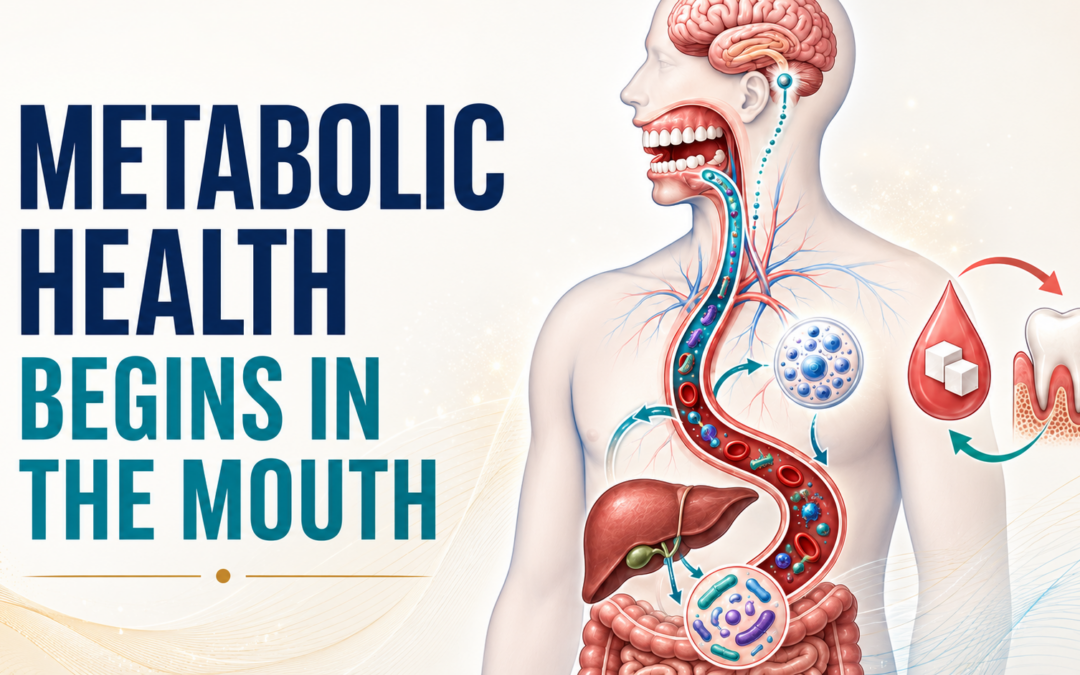
Metabolic Health Begins in the Mouth
Why dentistry, medicine, public health and food innovation must begin connecting the dots
For decades, oral health and metabolic health have largely been treated as separate domains. Dentists cared for teeth and gums; physicians managed diabetes, cardiovascular disease and other chronic conditions; nutrition professionals focused on diet; and food companies concentrated on products.
The science increasingly tells us that these boundaries are artificial.
The mouth is not an isolated compartment. It is the first place food encounters human biology, home to a complex microbial ecosystem and highly vascular tissues that interact continuously with the immune and metabolic systems. Oral disease can reflect metabolic dysfunction elsewhere in the body, while chronic inflammation originating in the mouth may add to the systemic inflammatory burden.
The strongest evidence concerns the relationship between diabetes and periodontal disease. But the broader connections—with metabolic syndrome, obesity, cardiovascular disease, fatty liver disease and the oral microbiome—point toward a more integrated understanding of health.
One diet, multiple consequences
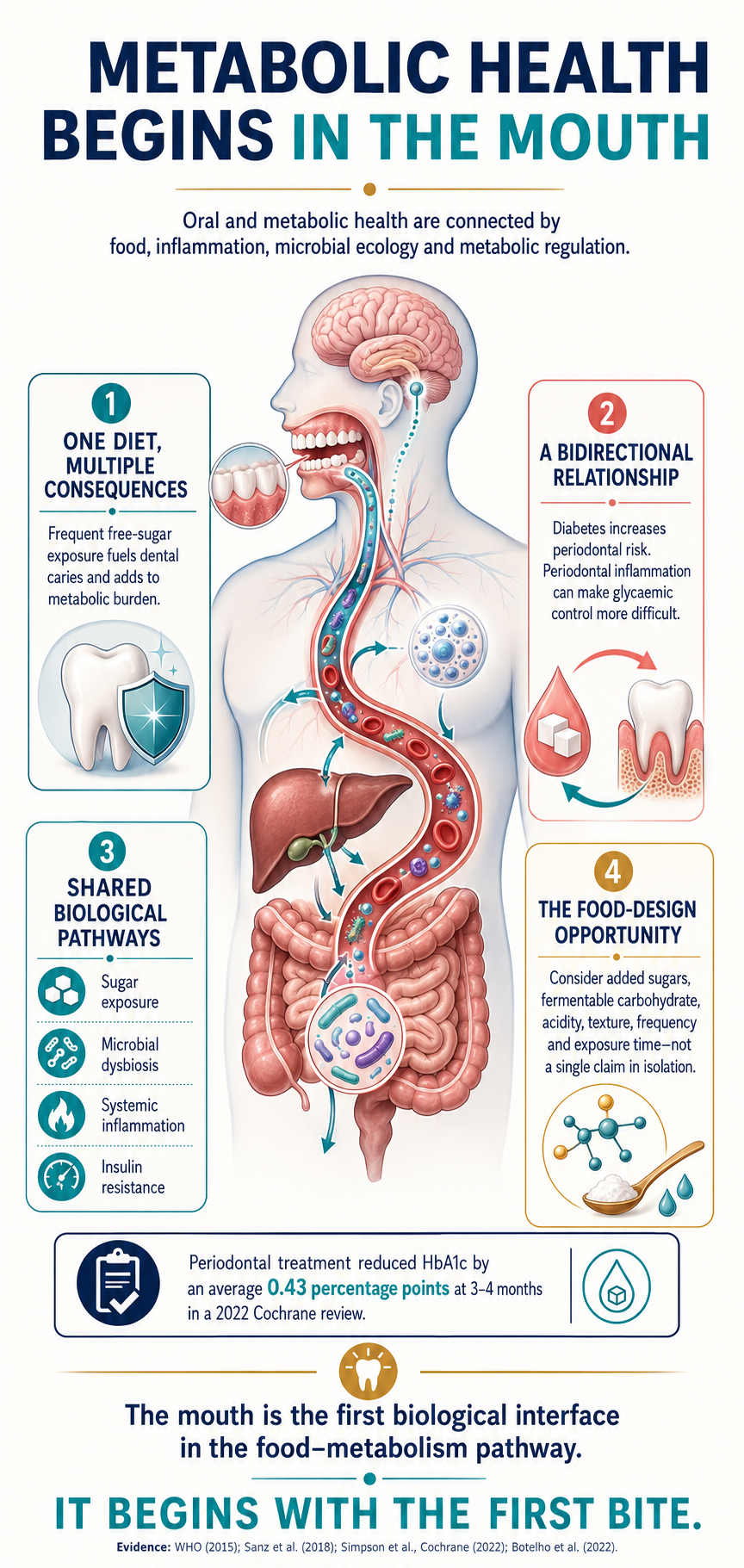
The most immediate connection between oral and metabolic health is dietary sugar.
In the mouth, bacteria metabolize fermentable carbohydrates and produce acids that lower plaque pH and demineralize tooth enamel. Repeated exposure—especially through frequent consumption of foods and beverages containing free sugars—creates the conditions in which dental caries can develop.
Downstream, the metabolic consequences are different but related. High exposure to added and free sugars, particularly in liquid and rapidly absorbed forms, can contribute to excess energy intake, insulin resistance, dyslipidaemia and liver fat accumulation within an unhealthy dietary pattern.
This helps explain why the World Health Organization’s guideline on free sugars addresses both dental caries and unhealthy weight gain. WHO recommends reducing free sugars to less than 10% of total energy intake and suggests that reducing intake below 5% may provide additional benefits, particularly for dental health. The recommendation reflects a shared-risk-factor approach: changing one important feature of the food environment can influence several chronic diseases at once. (WHO guideline)
Peter Hujoel’s 2009 review, Dietary Carbohydrates and Dental-Systemic Diseases, revisited the historical argument that dental and systemic chronic diseases may cluster partly because they share dietary causes. Although some of the paper’s broader hypotheses remain debated, its central question has become increasingly relevant: are dental diseases merely local problems, or can they serve as visible signals of the same food environment driving chronic disease elsewhere in the body? (Journal of Dental Research)
Dr. Robert Lustig captured this connection in his presentation, Tooth Decay and Liver Decay: The Nexus Between Doctors and Dentists. Teeth and liver experience sugar through different biological pathways, but both may reveal the consequences of repeated exposure to a food environment dominated by added sugars and refined carbohydrates.
Dental caries can therefore be understood not only as damage to a tooth, but also as a highly visible warning that diet, food formulation and patterns of consumption deserve closer attention.
The diabetes–periodontitis relationship is bidirectional
The relationship between diabetes and periodontal disease goes beyond shared exposure to an unhealthy diet.
Periodontitis is a chronic inflammatory disease in which a dysbiotic dental-plaque biofilm and an exaggerated or poorly regulated immune response damage the tissues and bone supporting the teeth. Diabetes—particularly when poorly controlled—can increase susceptibility to periodontal inflammation, impair healing and accelerate periodontal destruction.
The relationship also appears to work in the other direction. Periodontal inflammation and microbial products may enter the circulation and contribute to systemic inflammation, making glycaemic control more difficult.
A joint consensus report from the European Federation of Periodontology and the International Diabetes Federation concluded that diabetes and periodontitis have a bidirectional relationship. People with periodontitis have an elevated risk of dysglycaemia and insulin resistance, while people with diabetes—especially those with poor glycaemic control—face greater periodontal risk and severity. (Sanz et al., 2018)
Treatment evidence makes this relationship particularly important. A 2022 Cochrane review examined 30 trials involving 2,443 participants with usable results. Periodontal treatment was associated with an average reduction of 0.43 percentage points in HbA1c after three to four months compared with no active treatment or usual care. The authors judged the evidence to be of moderate certainty. Periodontal treatment is not a substitute for diabetes treatment, but this finding demonstrates that caring for the mouth can contribute measurably to metabolic management. (Cochrane Review)
This has practical implications in both directions. Physicians caring for people with diabetes should consider periodontal health, while dentists may be well positioned to identify patients showing signs consistent with undiagnosed or poorly controlled diabetes and refer them for medical assessment.
Metabolic syndrome and the inflammatory bridge
Periodontal disease has also been associated with metabolic syndrome—the cluster of abdominal obesity, elevated blood glucose, abnormal blood lipids and hypertension that increases the risk of type 2 diabetes and cardiovascular disease.
Both conditions are characterized by inflammatory and metabolic disturbance. Adipose tissue can release inflammatory mediators that alter immune regulation, while inflamed periodontal tissues can release cytokines, bacteria and bacterial products into the circulation. Insulin resistance may make the periodontal tissues more vulnerable, and periodontal inflammation may add to the systemic burden that sustains insulin resistance.
An early review by Bharti and Khurana described inflammation, insulin resistance and endothelial dysfunction as plausible common pathways linking metabolic syndrome and periodontal disease. The authors appropriately emphasized that the evidence available at that time was primarily associative and that longitudinal and intervention studies were still needed. (Bharti and Khurana, 2009)
Subsequent systematic reviews have strengthened the evidence for an association. However, association does not by itself establish that periodontal disease directly causes metabolic syndrome, or vice versa. Smoking, dietary quality, obesity, socioeconomic conditions, access to care and other shared factors can influence both.
The scientifically responsible conclusion is not that every oral disease causes systemic disease. It is that oral and metabolic disorders frequently occur within the same biological, dietary and social system—and should no longer be assessed entirely in isolation.
The mouth as a source and signal of systemic inflammation
The oral cavity contains hundreds of microbial species. Most are compatible with health, but changes in diet, saliva, immune function and oral hygiene can destabilize this ecosystem. In periodontitis, dysbiotic communities develop below the gumline, where they provoke persistent inflammation and damage the tissues separating the oral biofilm from the circulation.
Bacteria and bacterial products can enter the bloodstream during everyday activities such as chewing or brushing, particularly when the gums are inflamed. The body usually clears these exposures, but repeated microbial translocation and immune activation provide a plausible pathway connecting severe periodontal disease with systemic inflammation.
A major 2022 umbrella review in Nature Communications evaluated 293 systematic reviews with meta-analyses. It found strong associations between periodontal disease and several noncommunicable conditions, including diabetes and cardiovascular disease. It also found associations involving obesity and non-alcoholic fatty liver disease. At the same time, the authors identified substantial heterogeneity and generally low methodological quality across much of the underlying literature. (Botelho et al., 2022)
That distinction matters. The evidence firmly supports integration of oral health into whole-person care. It does not yet justify claiming that treating periodontal disease will prevent every associated systemic condition.
What this means for the Metabolic Matrix
The Metabolic Matrix is organized around three biological imperatives:
-
Feed the Gut
-
Protect the Liver
-
Support the Brain
The emerging oral–metabolic evidence adds an important upstream perspective. Before food reaches the gut or liver, it interacts with teeth, saliva, oral tissues and the oral microbiome. The mouth is therefore the first biological interface in the food–metabolism pathway.
This does not necessarily require adding a fourth pillar to the Metabolic Matrix. It does require recognizing that better food design can create benefits across interconnected systems.
Reducing added and free sugars is one of the clearest examples. It can reduce the substrate available for acid-producing oral bacteria while also supporting the Matrix objective of reducing unnecessary metabolic burden. Yet “no added sugar” should not automatically be interpreted as “tooth-friendly.” Total fermentable carbohydrate, product acidity, texture, stickiness, eating frequency, portion size and exposure time also influence oral-health effects.
This is precisely why food products cannot be judged by a single nutrient or front-of-pack claim. The whole formulation, processing method, structure and likely pattern of consumption matter.
A more integrated food-design approach should ask:
-
How often is the product likely to expose teeth to fermentable carbohydrate or acid?
-
Does the formulation contain unnecessary added or free sugars?
-
What is the product’s likely effect on glycaemic and hepatic burden?
-
Does its physical structure prolong contact with teeth?
-
Does the product encourage frequent sipping or grazing?
-
Can reformulation reduce harm without undermining affordability, safety or consumer acceptance?
These questions extend the Metabolic Matrix principle that health outcomes should be designed upstream, while ingredients and processing decisions can still be changed—not simply measured after products reach the shelf.
Connecting dentistry, medicine and food innovation
Oral health offers an unusually understandable entry point into the wider metabolic-health conversation. Most people readily recognize that excessive sugar exposure can damage teeth. The deeper opportunity is to show that the same food environment may affect the liver, glucose regulation, inflammatory status and long-term health.
This creates an important agenda for collaboration:
-
Dentists and physicians can establish better screening and referral pathways.
-
Public-health institutions can integrate oral health into chronic-disease prevention.
-
Researchers can investigate shared dietary, inflammatory and microbial mechanisms.
-
Food companies can apply oral and metabolic criteria during product development.
-
Policymakers can treat free-sugar reduction as a cross-cutting health intervention rather than a narrowly dental or nutritional issue.
For Kuwait and the wider region—where diabetes, obesity, metabolic dysfunction and oral disease impose substantial health burdens—this connection deserves focused attention. A scientific symposium bringing together dentists, periodontists, endocrinologists, hepatologists, nutritionists, microbiome researchers and food scientists could help translate the evidence into practical action.
The central message is simple:
The mouth is not separate from the rest of the body. Oral and metabolic health are connected by food, microbial ecology, inflammation and metabolic regulation.
Metabolic health does not begin only in the gut, liver or brain. It begins with the first bite.
Selected references
-
Botelho J, et al. An umbrella review of the evidence linking oral health and systemic noncommunicable diseases. Nature Communications. 2022;13:7614. https://doi.org/10.1038/s41467-022-35337-8
-
Sanz M, et al. Scientific evidence on the links between periodontal diseases and diabetes: Consensus report and guidelines. Journal of Clinical Periodontology. 2018;45:138–149. https://doi.org/10.1111/jcpe.12808
-
Simpson TC, et al. Treatment of periodontitis for glycaemic control in people with diabetes mellitus. Cochrane Database of Systematic Reviews. 2022;4:CD004714. https://doi.org/10.1002/14651858.CD004714.pub4
-
Hujoel PP. Dietary carbohydrates and dental-systemic diseases. Journal of Dental Research. 2009;88(6):490–502. https://doi.org/10.1177/0022034509337700
-
Bharti V, Khurana P. Metabolic syndrome and periodontal disease. Journal of Indian Society of Periodontology. 2009;13(3):172–174. https://doi.org/10.4103/0972-124X.60234
-
World Health Organization. Guideline: Sugars Intake for Adults and Children. Geneva: WHO; 2015. WHO guideline