Hateful Eight”—or the “Grateful Eight”
The Diseases that aren't DiseasesThe “Diseases” That Aren’t Diseases
Understanding the Hidden Drivers of Chronic Illness
Many of the conditions we associate with modern chronic disease are not actually diseases in the traditional medical sense. They don’t have a single diagnostic test, a clear ICD code, or a specific drug designed to treat them. Yet they quietly shape our health for years—often decades—before a formal diagnosis appears.
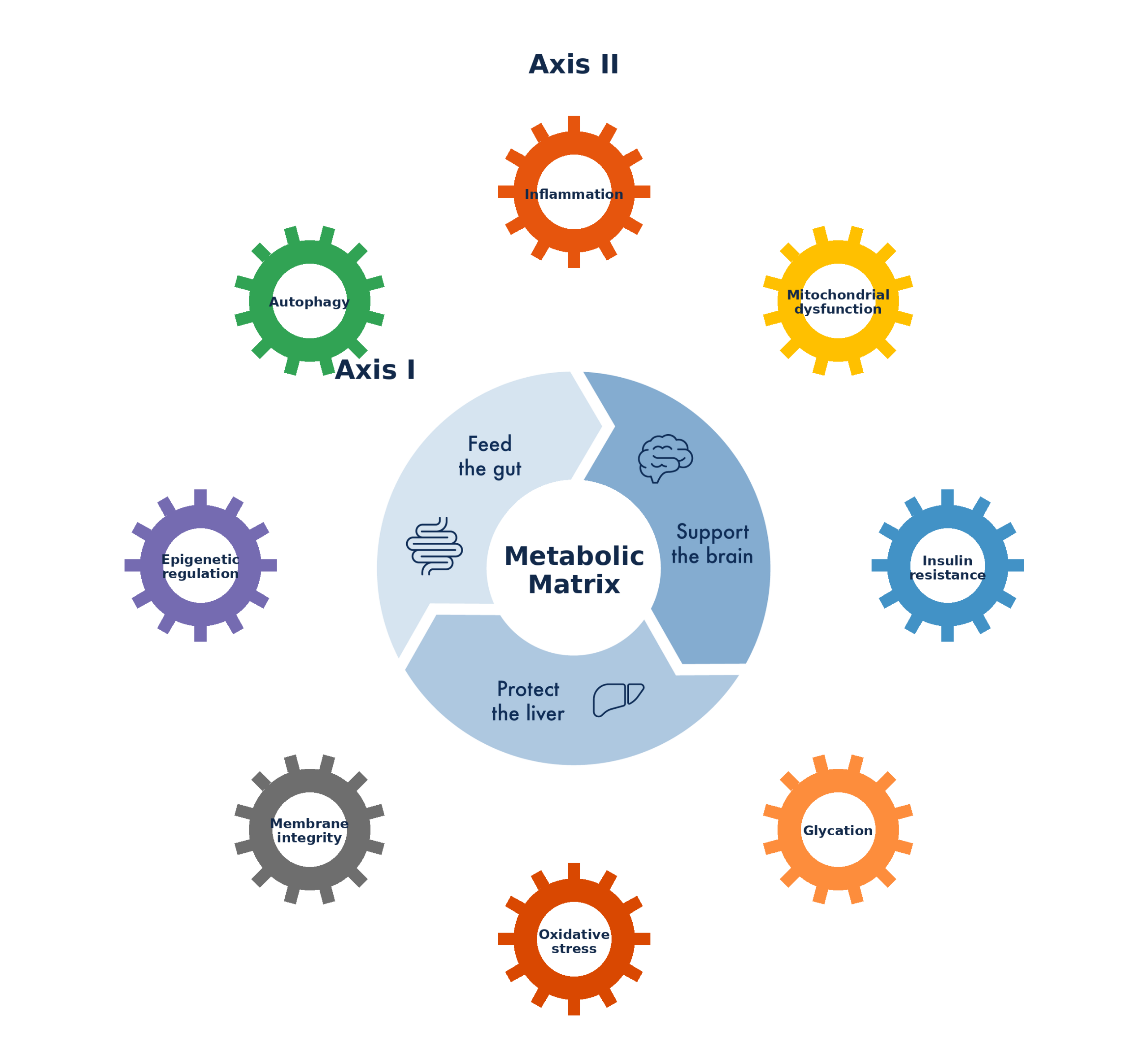
A chapter in Metabolical by Dr. Robert H. Lustig titled “Debunking Chronic Disease – The “Diseases” That Aren’t Diseases” (Page 105-122) describes eight underlying biological processes that tend to go wrong together. When functioning well, they support resilience and longevity. When disrupted, they accelerate aging and dramatically increase the risk of chronic disease. Together, they are sometimes called the “Hateful Eight”—or the “Grateful Eight” when they’re working properly.
From a Metabolic Matrix perspective, these are not isolated problems. They are interacting systems inside the cell, heavily influenced by what we eat, how we move, how we sleep, and how processed our environment has become.
Why These Processes Matter
-
They don’t show up early on standard lab tests. Dysfunction can be present long before blood markers cross diagnostic thresholds.
-
They’re not classified as diseases. That means they’re often ignored in routine care, even though they drive disease risk.
-
They cluster and amplify each other. When one pathway breaks down, others often follow.
-
They are strongly influenced by food quality. Ultra-processed foods tend to worsen many of them at once.
The Eight Core Processes
1. Glycation
Glycation occurs when sugars bind to proteins, fats, or DNA, making tissues stiffer and less functional. Over time, this leads to the buildup of advanced glycation end products (AGEs), which are closely linked to aging and chronic disease. Fructose is especially potent at driving glycation.
Matrix insight: Reducing added sugars and prioritizing whole, fiber-rich foods lowers glycation pressure.
2. Oxidative Stress
Cells naturally produce reactive oxygen species during metabolism. Problems arise when antioxidant defenses can’t keep up. Excess oxidative stress damages membranes, proteins, and DNA and is tightly linked to inflammation and aging.
Matrix insight: Colorful, minimally processed foods help maintain antioxidant balance.
3. Mitochondrial Dysfunction
Mitochondria convert food into usable energy. When they’re overloaded or impaired, energy production drops and excess fuel is diverted into fat storage and harmful byproducts. Mitochondrial dysfunction is a hallmark of metabolic disease and aging.
Matrix insight: Consistent movement and better food inputs improve mitochondrial capacity—but exercise alone can’t fix a bad diet.
4. Insulin Resistance
Insulin is a storage hormone. When cells are repeatedly exposed to high insulin levels, they become less responsive. This forces the body to produce even more insulin, driving fat accumulation and metabolic dysfunction.
Matrix insight: Improving food quality, reducing excess refined carbohydrates, managing stress, and moving daily all reduce insulin resistance.
5. Membrane Integrity
Healthy cell membranes must be flexible and resilient. Oxidative damage, poor-quality fats, and industrial trans fats stiffen membranes and impair signaling, transport, and cellular communication.
Matrix insight: Favor whole-food fat sources and avoid repeatedly heating oils or consuming ultra-processed fats.
6. Inflammation
Inflammation is essential for defense and repair—but when it becomes chronic or misdirected, it damages tissues. Poor gut barrier function (“leaky gut”) allows bacterial components to enter circulation, worsening insulin resistance and systemic inflammation.
Matrix insight: Fiber-rich, minimally processed diets support gut integrity and reduce inflammatory signaling.
7. Epigenetic Dysregulation
Genes are not destiny. Environmental inputs—including food, toxins, and stress—can turn genes on or off through epigenetic mechanisms. These changes can influence disease risk within a lifetime and, in some cases, across generations.
Matrix insight: A supportive daily environment—nutrient-dense food, fewer chemical exposures, and stable metabolic signals—helps regulate gene expression.
8. Impaired Autophagy
Autophagy is the cell’s cleanup and recycling system. It removes damaged proteins and organelles, including dysfunctional mitochondria. Poor sleep and constant feeding suppress this essential repair process.
Matrix insight: Protecting sleep and allowing regular breaks from eating (such as time-restricted eating) supports cellular renewal.
Why These Problems Travel Together
These eight processes rarely occur in isolation. Oxidative stress damages membranes. Inflammation increases oxidative load. Mitochondrial dysfunction worsens insulin resistance. Insulin resistance increases fat storage and inflammation. Ultra-processed foods push all of these pathways in the wrong direction simultaneously.
This is why chronic disease so often appears as a cluster rather than a single issue.
The Metabolic Matrix Approach
Rather than treating downstream symptoms, the Metabolic Matrix focuses on upstream inputs:
-
Eat mostly real, minimally processed food
-
Reduce added sugars and refined carbohydrates
-
Move daily
-
Protect sleep
-
Use meal timing strategically
-
Reduce exposure to unnecessary chemical stressors
These actions don’t target one pathway—they improve the entire system.
The Big Takeaway
These “diseases” aren’t diseases at all. They’re warning signs of a metabolic system under strain. Addressing them early—before diagnosis—is one of the most powerful ways to improve healthspan, reduce chronic disease risk, and restore resilience.
The goal isn’t perfection. It’s alignment.
The Bridge to the Metabolic Matrix
The eight intracellular processes often described as the “Hateful” or “Grateful” Eight are not a separate model from the Metabolic Matrix—they are its cellular foundation.
The Metabolic Matrix (Axis 1) frames metabolic health at the organ level, through the dynamic relationship between the gut, the liver, and the brain. Beneath that visible structure lies (Axis 2): cellular metabolism, where these eight processes govern how energy is processed, signals are interpreted, and damage is repaired inside every cell.
When we say “support the brain, protect the liver, and feed the gut,” we are describing organ-level strategies that ultimately work by improving glycation, oxidative stress, mitochondrial function, insulin signaling, membrane integrity, inflammation, epigenetic regulation, and autophagy at the cellular level.
Going deeper still, this cellular layer connects naturally to the molecular layer—the metabolomics of food explored by the Periodic Table of Food Initiative—where specific food compounds interact directly with these intracellular pathways. Seen this way, the Metabolic Matrix is a zoomed-out systems map, the Eight are the deep mechanics, and food is the set of signals that connects them.