
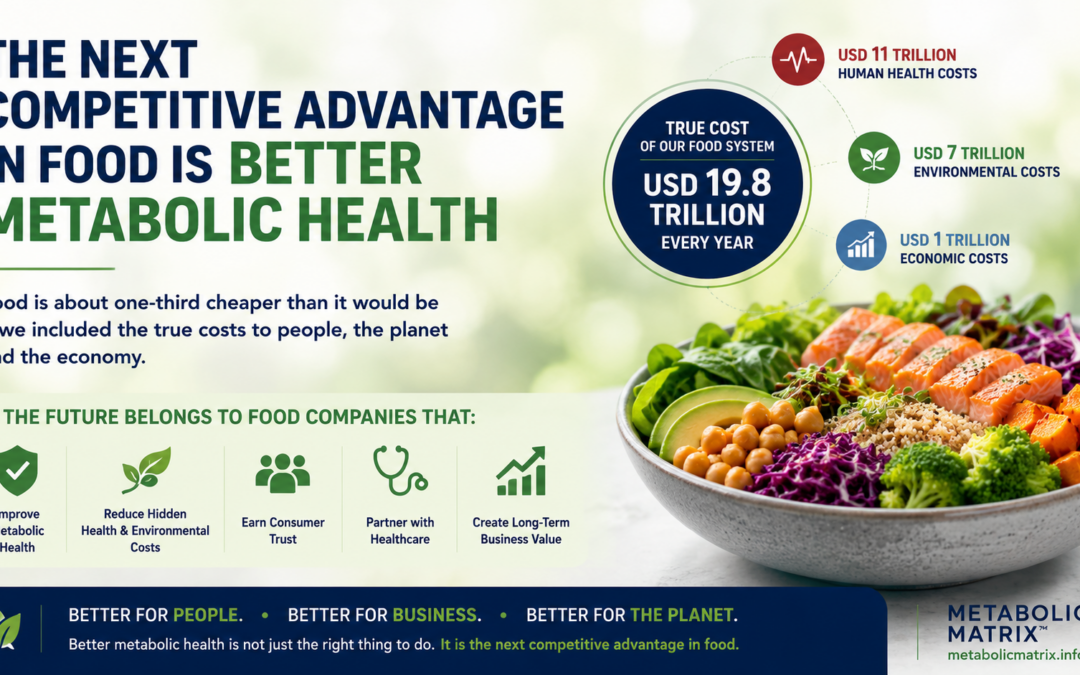
For decades, the food industry has competed on a familiar set of dimensions: taste, convenience, affordability, branding, distribution and innovation. More recently, sustainability and transparency have joined that list. These remain essential, but a more fundamental competitive frontier is beginning to emerge.
The next generation of leading food companies will not simply make existing products slightly less unhealthy. They will create products and portfolios that actively support better metabolic health.
This is more than a public health aspiration. It is becoming a business imperative.
The Hidden Economics of Food
One of the clearest signals comes from an unexpected place—not from the food industry itself, but from economics.
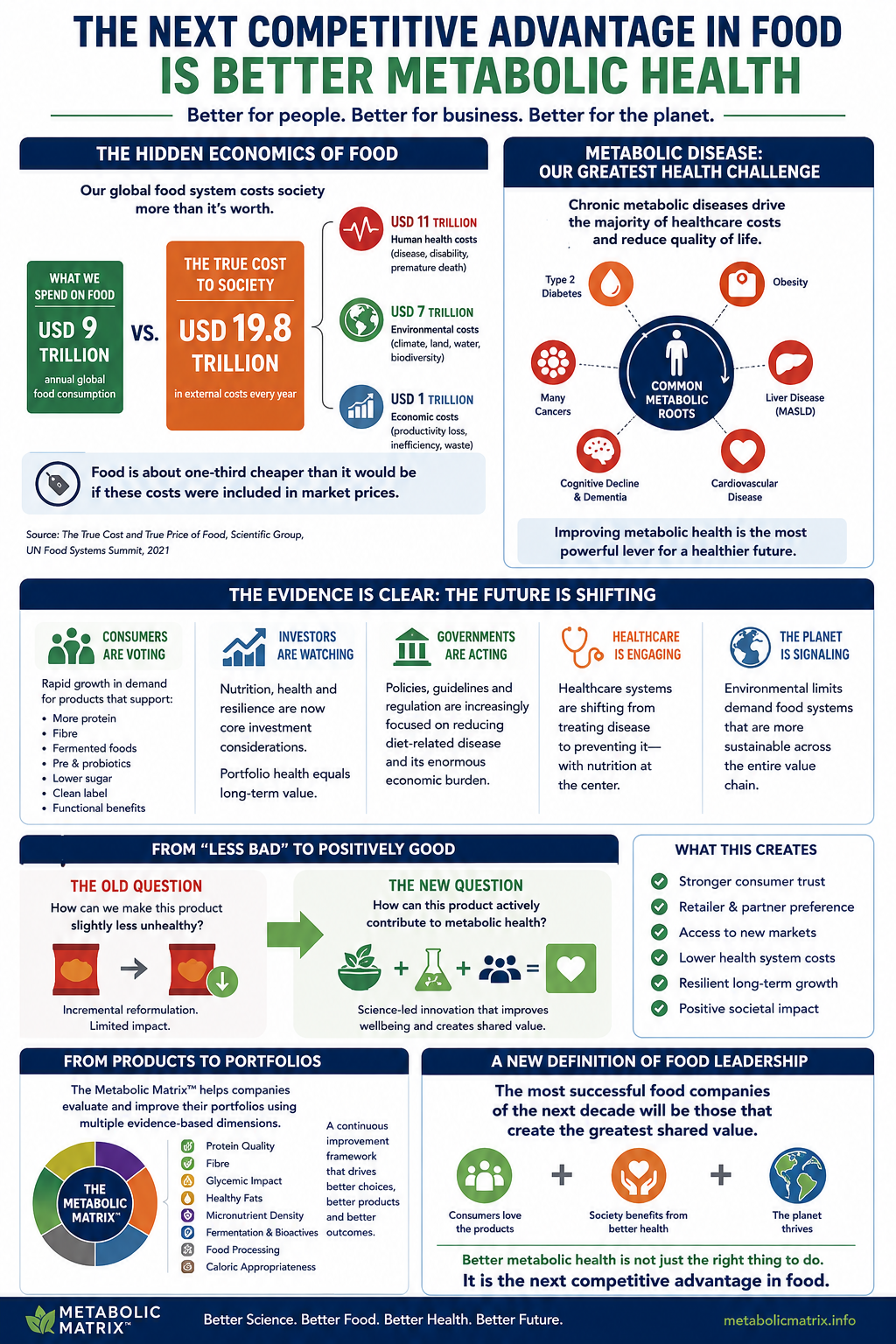
In preparation for the 2021 United Nations Food Systems Summit, the Scientific Group examined the true cost of our global food system. Their findings were striking.
Global consumers spend approximately USD 9 trillion annually on food. Yet the total societal costs associated with producing and consuming that food were estimated at nearly USD 19.8 trillion.
These hidden costs—or externalities—include:
- USD 11 trillion in human health costs
- USD 7 trillion in environmental costs
- USD 1 trillion in broader economic costs
The implication is profound.
The report concludes that food is effectively about one-third cheaper than it would be if these costs were reflected in market prices.
In other words, much of the real cost of food is currently paid elsewhere: by healthcare systems, governments, employers, families and future generations.
Metabolic Health Has Become a Strategic Issue
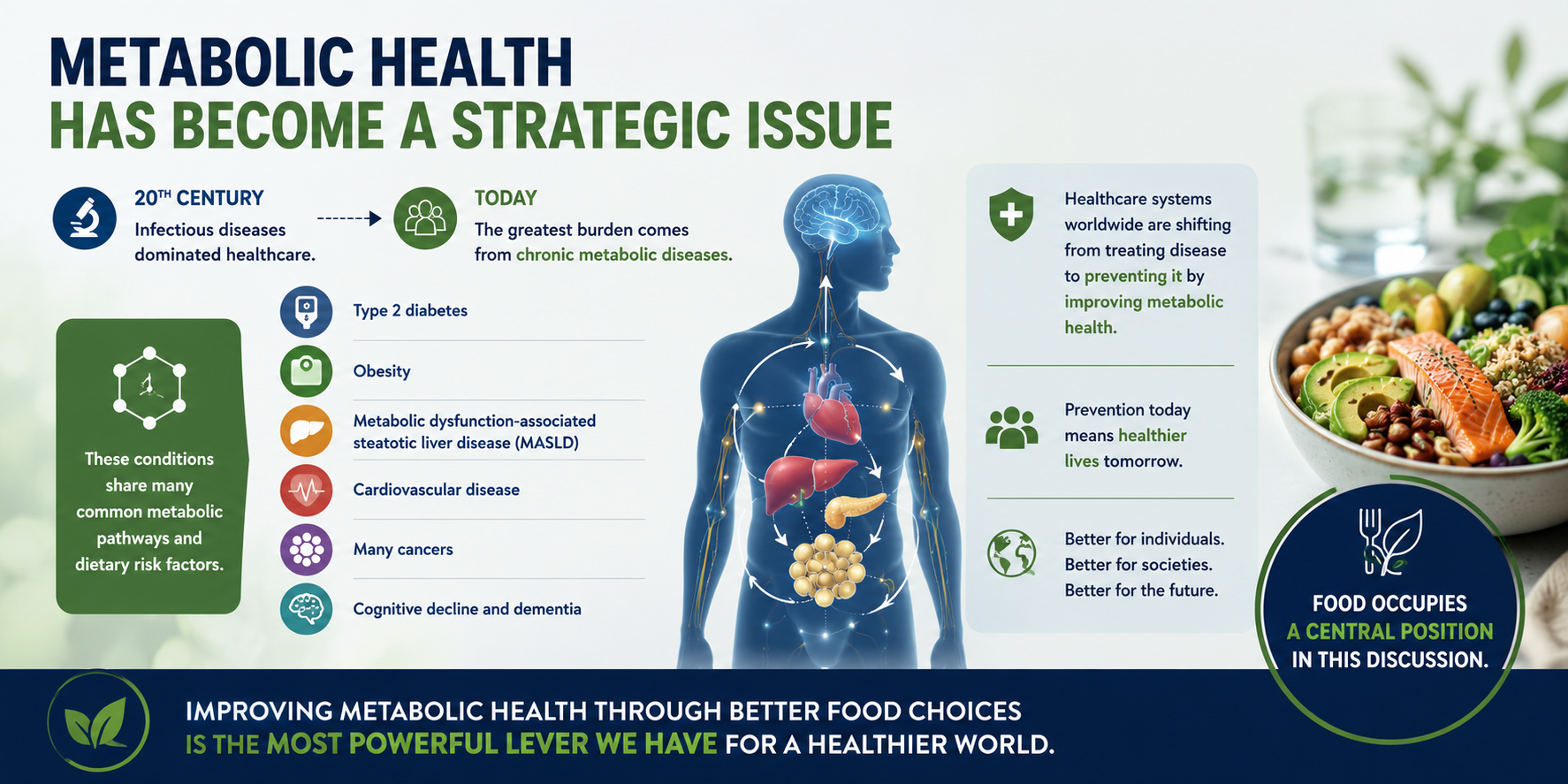
For much of the twentieth century, infectious diseases dominated healthcare.
Today, the greatest burden comes from chronic metabolic diseases, including:
- Type 2 diabetes
- Obesity
- Metabolic dysfunction-associated steatotic liver disease (MASLD)
- Cardiovascular disease
- Many cancers
- Cognitive decline and dementia
Although these conditions have different clinical presentations, they share many common metabolic pathways and dietary risk factors.
Healthcare systems around the world are increasingly recognizing that preventing these conditions requires improving metabolic health—not simply treating disease after it develops.
Food therefore occupies a central position in this discussion.
Beyond “Less Bad”
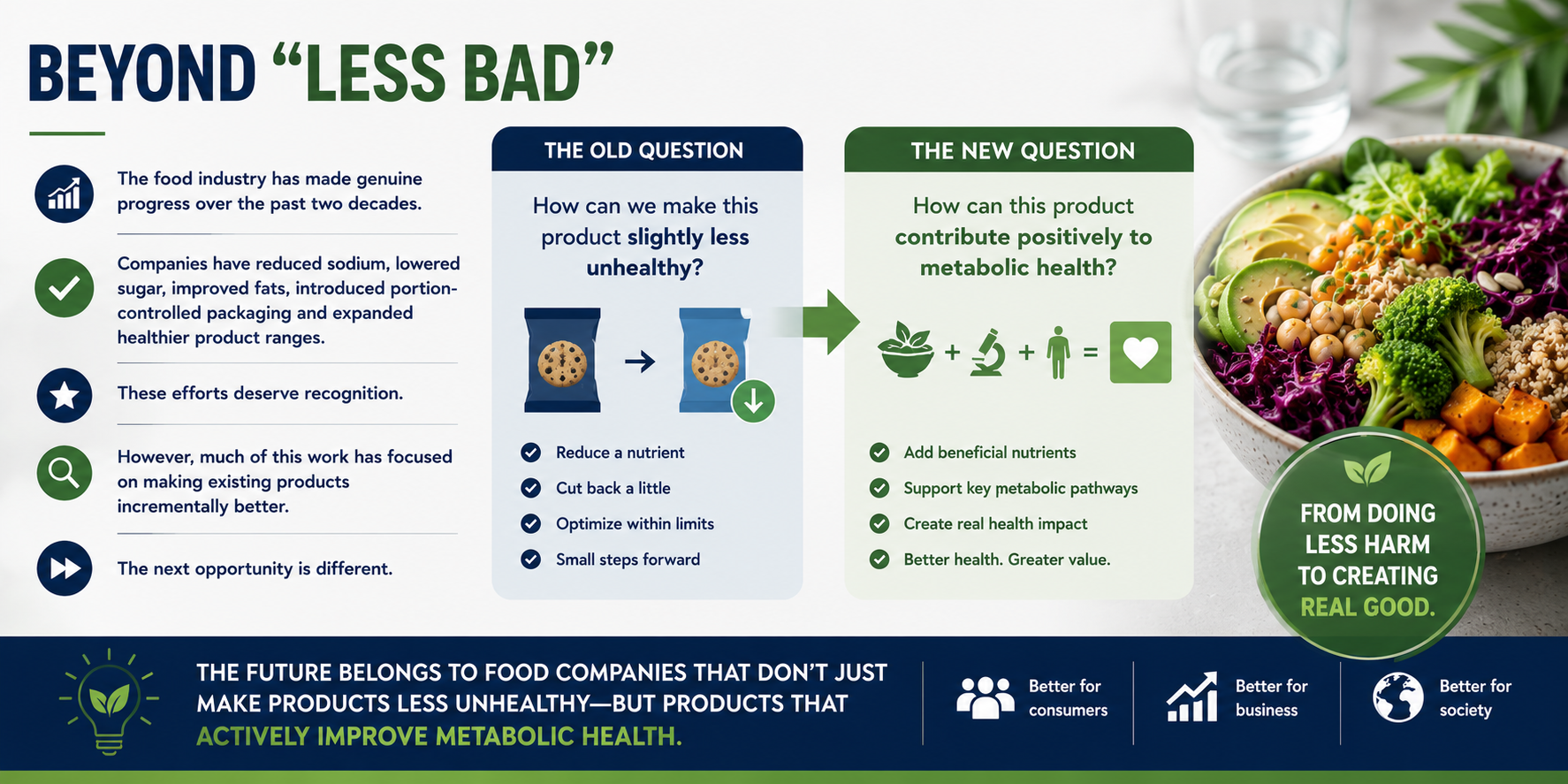
The food industry has made genuine progress over the past two decades.
Companies have reduced sodium, lowered sugar, improved fats, introduced portion-controlled packaging and expanded healthier product ranges.
These efforts deserve recognition.
However, much of this work has focused on making existing products incrementally better.
The next opportunity is different.
Rather than asking:
“How can we make this product slightly less unhealthy?”
we should increasingly ask:
“How can this product contribute positively to metabolic health?”
That is a fundamentally different innovation challenge.
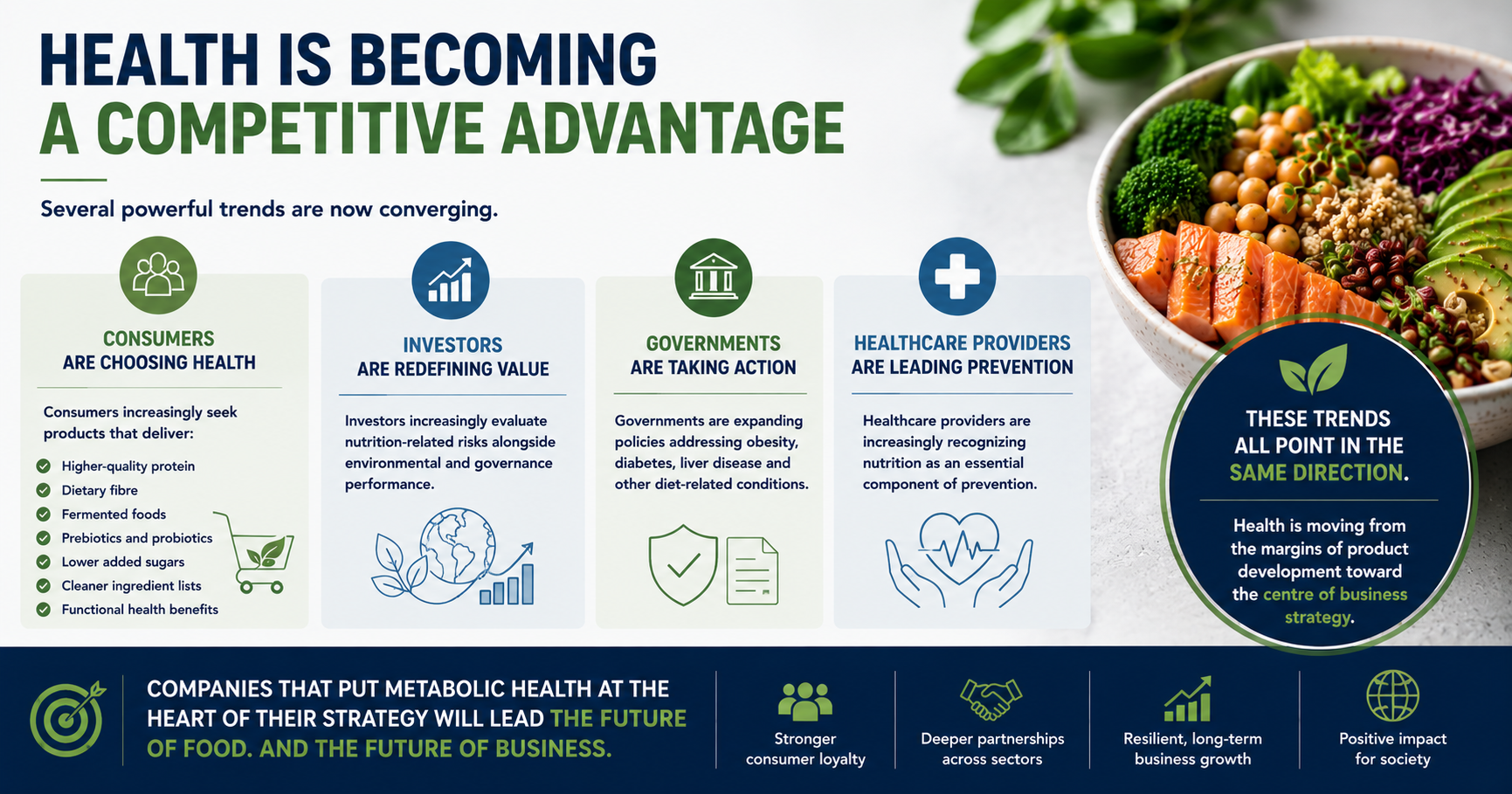
Health Is Becoming a Competitive Advantage
Several powerful trends are now converging.
Consumers increasingly seek products that deliver:
- Higher-quality protein
- Dietary fibre
- Fermented foods
- Prebiotics and probiotics
- Lower added sugars
- Cleaner ingredient lists
- Functional health benefits
Investors increasingly evaluate nutrition-related risks alongside environmental and governance performance.
Governments are expanding policies addressing obesity, diabetes, liver disease and other diet-related conditions.
Healthcare providers are increasingly recognizing nutrition as an essential component of prevention.
These trends all point in the same direction.
Health is moving from the margins of product development toward the centre of business strategy.
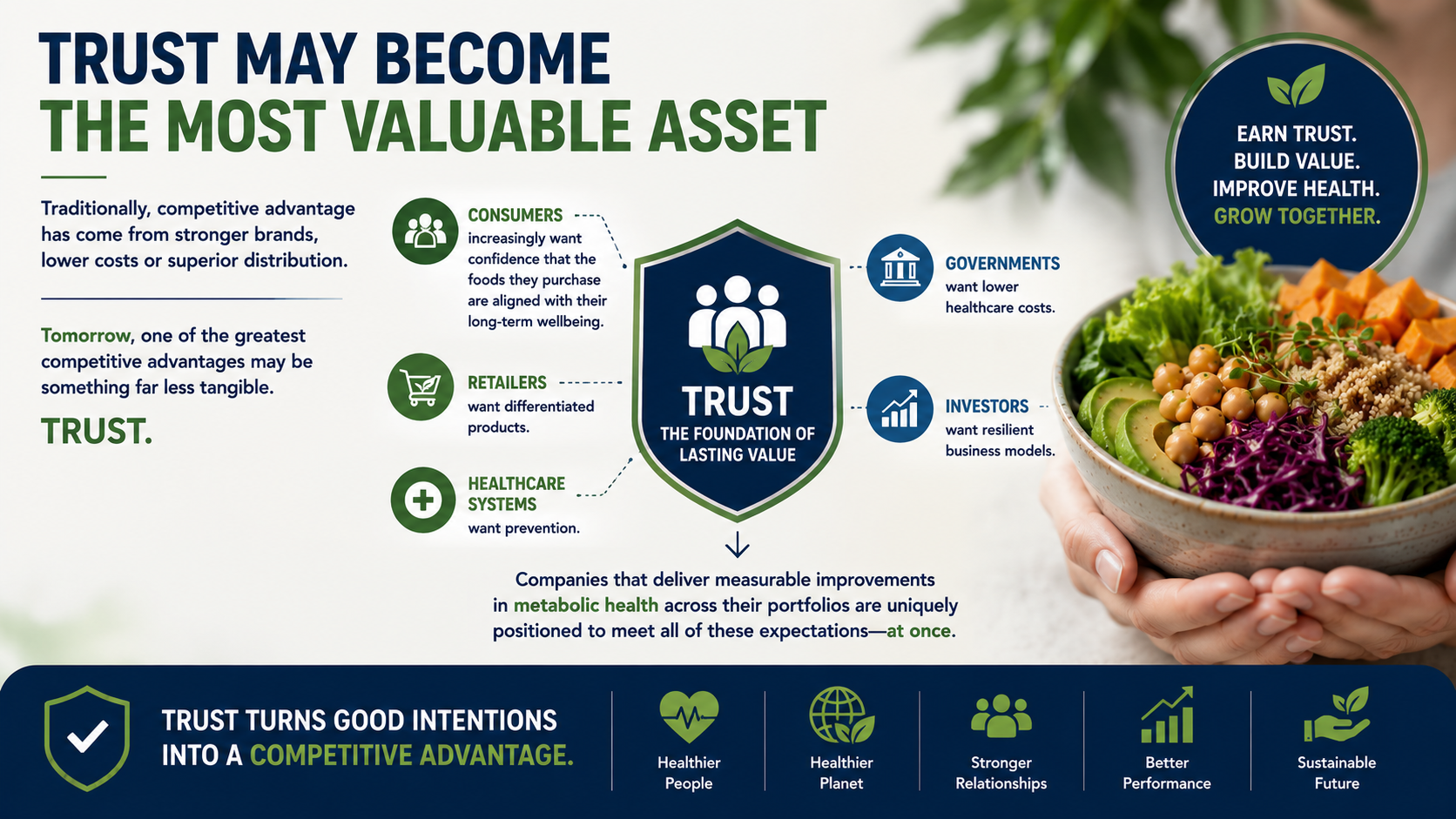
Trust May Become the Most Valuable Asset
Traditionally, competitive advantage has come from stronger brands, lower costs or superior distribution.
Tomorrow, one of the greatest competitive advantages may be something far less tangible.
Trust.
Consumers increasingly want confidence that the foods they purchase are aligned with their long-term wellbeing.
Retailers want differentiated products.
Healthcare systems want prevention.
Governments want lower healthcare costs.
Investors want resilient business models.
Companies able to demonstrate measurable improvements in the metabolic quality of their portfolios may find themselves uniquely positioned to meet all of these expectations simultaneously.
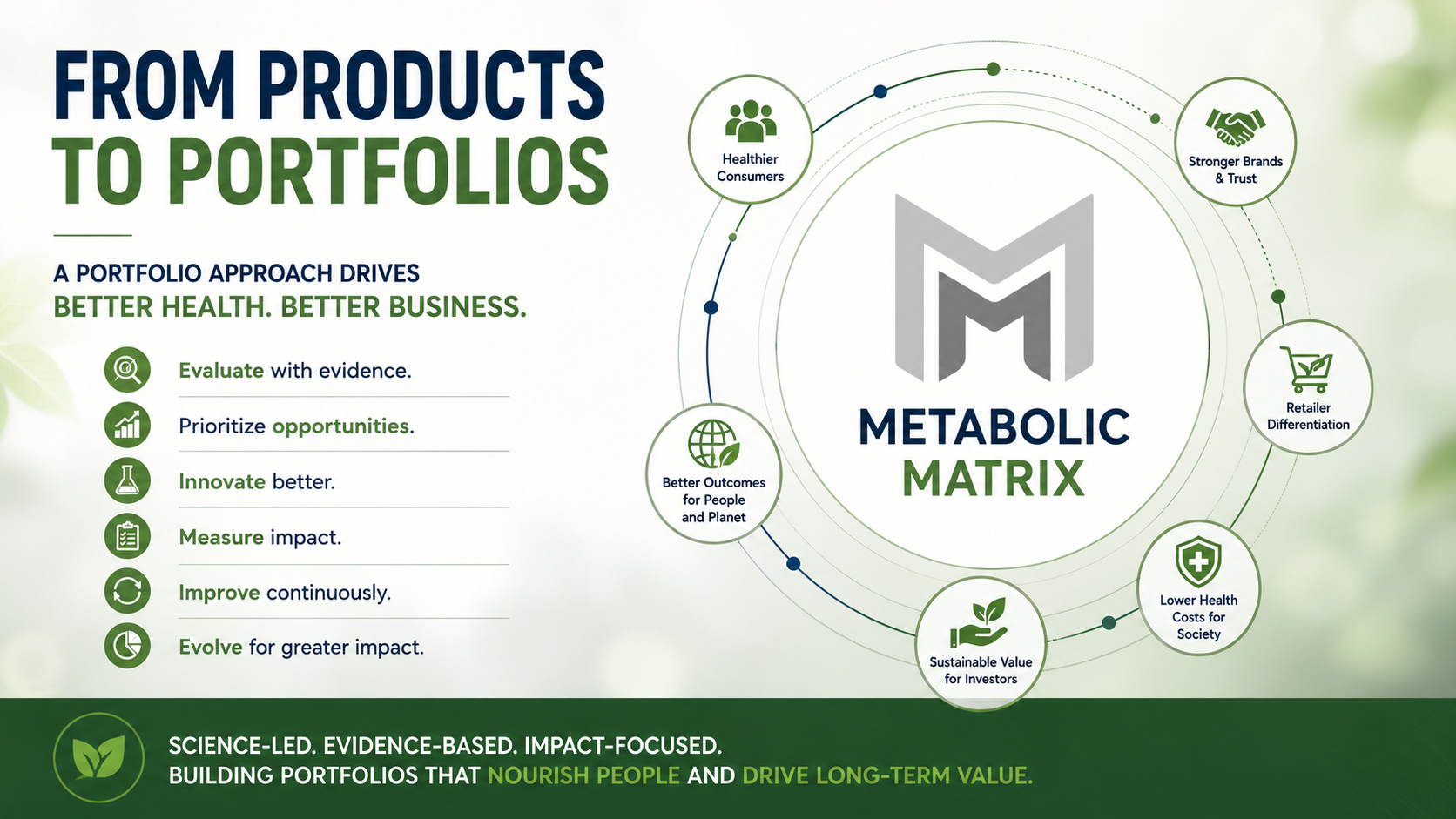
From Products to Portfolios
This shift requires thinking beyond individual products.
The future belongs to companies capable of continuously evaluating, improving and evolving entire product portfolios using robust scientific evidence.
This is precisely why we developed the Metabolic Matrix.
Rather than evaluating foods using a single nutrient or a simplistic “good” versus “bad” framework, the Metabolic Matrix considers multiple evidence-based dimensions that influence metabolic health. It encourages continuous improvement rather than static classification.
Its purpose is not to eliminate consumer choice.
Its purpose is to provide a practical framework that helps food companies innovate in ways that improve both commercial performance and health outcomes.
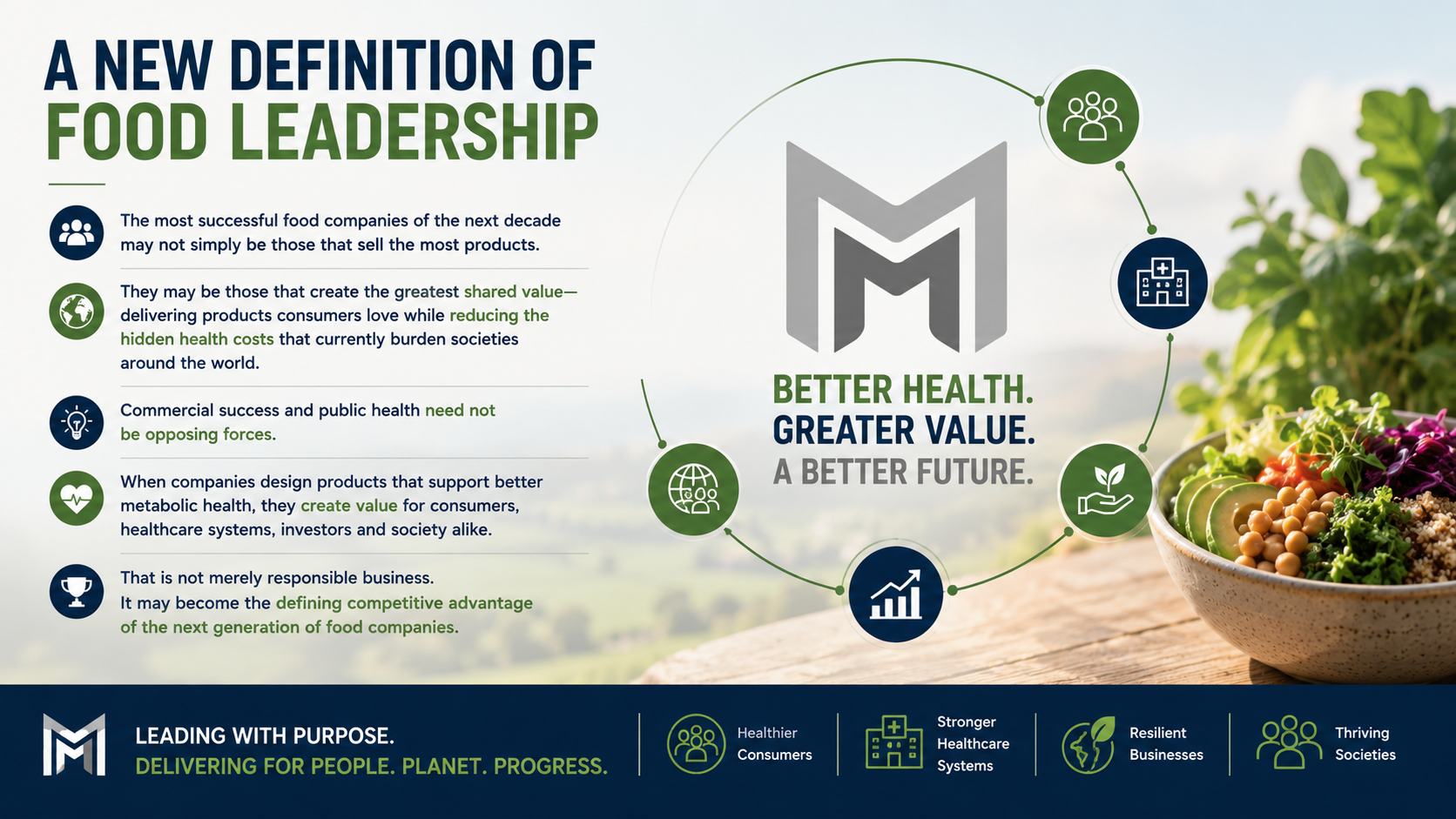
A New Definition of Food Leadership
The most successful food companies of the next decade may not simply be those that sell the most products.
They may be those that create the greatest shared value—delivering products consumers love while reducing the hidden health costs that currently burden societies around the world.
This represents a profound opportunity.
Commercial success and public health need not be opposing forces.
When companies design products that support better metabolic health, they create value for consumers, healthcare systems, investors and society alike.
That is not merely responsible business.
It may become the defining competitive advantage of the next generation of food companies.
References
- Scientific Group for the UN Food Systems Summit. The True Cost and True Price of Food. United Nations Food Systems Summit, 2021.
- United Nations Food Systems Summit. 2021. Scientific Group publications.
- The Lancet Commission on the Commercial Determinants of Health. The Lancet. 2023.
- World Health Organization. Global Action Plan for the Prevention and Control of Noncommunicable Diseases.
- Food and Agriculture Organization of the United Nations (FAO). Food Systems Transformation resources.