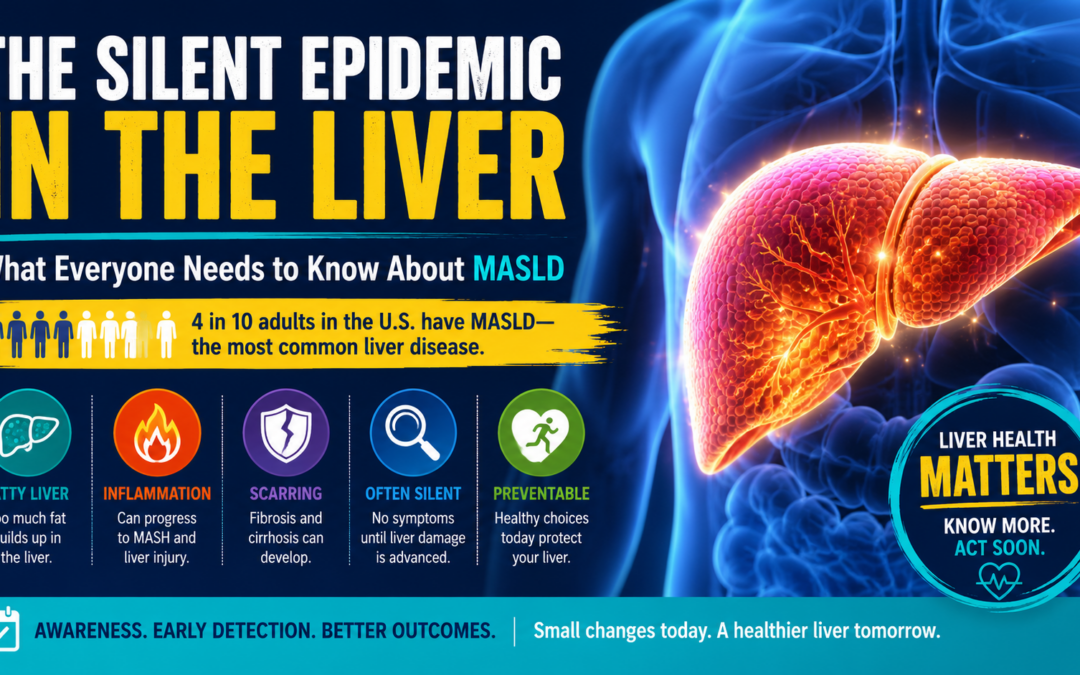
There is a growing health crisis unfolding quietly inside millions of people — often without symptoms, pain, or warning signs. It is called MASLD: metabolic dysfunction–associated steatotic liver disease, formerly known as nonalcoholic fatty liver disease (NAFLD). And according to the report “MASLD and Other Liver Conditions: What Everyone Needs to Know” by LiverWise and The National Alliance for Hispanic Health, it is now the most common liver disease in the United States.
The implications are profound.
The liver is one of the most metabolically important organs in the human body. It regulates blood sugar, processes nutrients, detoxifies harmful substances, manufactures proteins, and helps maintain energy balance. Yet modern lifestyles — dominated by ultra-processed foods, excessive sugar intake, sedentary behavior, metabolic syndrome, and chronic overnutrition — are overwhelming this critical organ.
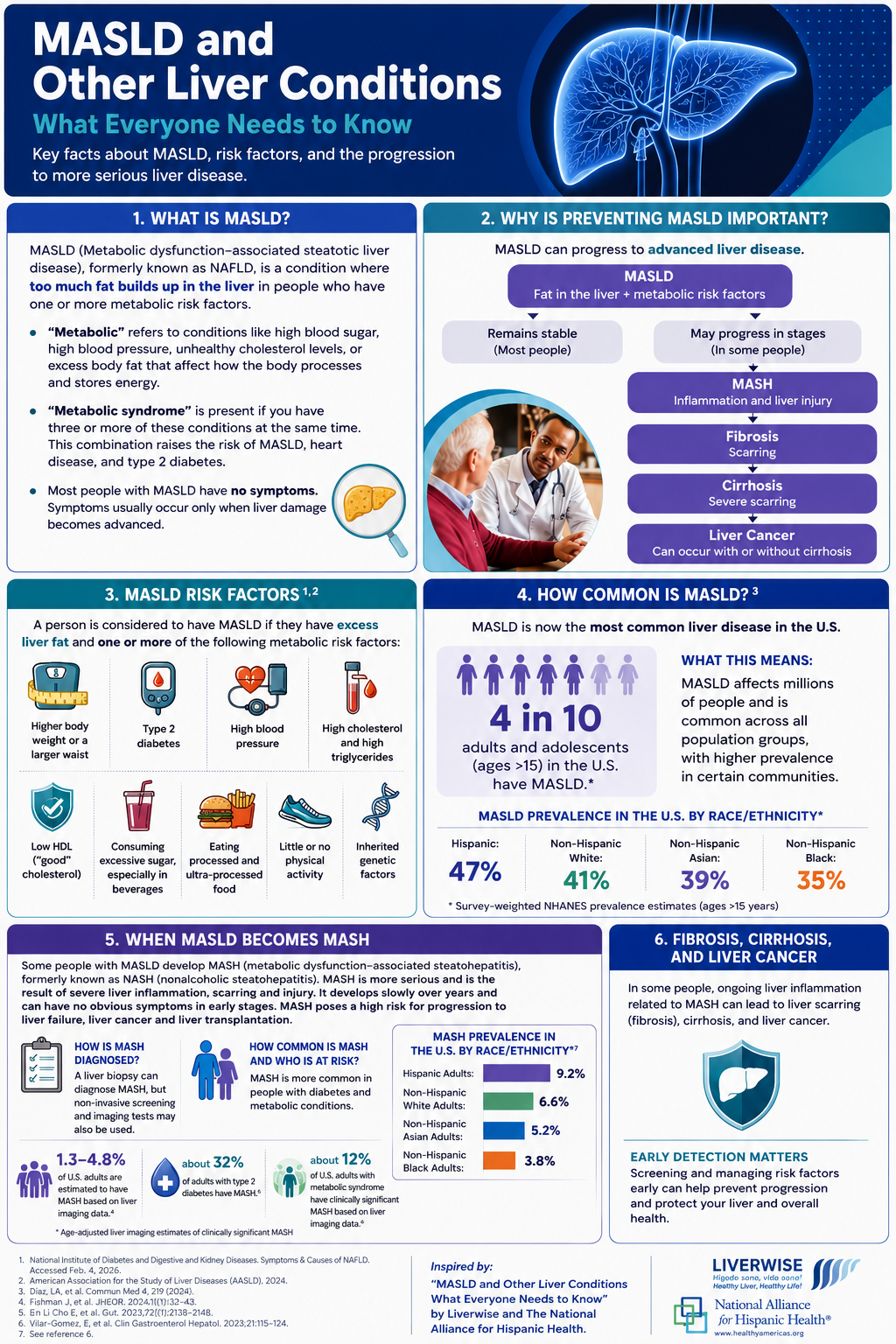
The report makes a striking point: approximately 4 in 10 adults and adolescents over age 15 in the United States now have MASLD. That statistic alone should elevate liver health into mainstream public health discourse alongside obesity, diabetes, and cardiovascular disease.
What Exactly Is MASLD?
MASLD occurs when excess fat accumulates in the liver in people who also have one or more metabolic risk factors such as high blood sugar, insulin resistance, hypertension, abnormal cholesterol levels, or excess body fat.
Importantly, MASLD is not simply “fat in the liver.” It is deeply connected to systemic metabolic dysfunction.
The condition exists on a spectrum. For many people, the disease may remain relatively stable. But for others, it progresses into MASH (metabolic dysfunction–associated steatohepatitis), a more dangerous inflammatory condition involving liver injury and scarring.
From there, the disease can evolve into fibrosis, cirrhosis, liver failure, and liver cancer.
This progression can take years — often silently.
The Most Dangerous Symptom: No Symptoms
One of the most unsettling realities highlighted in the report is that most people with MASLD experience no symptoms until liver damage becomes advanced.
This creates a dangerous public health paradox:
People may appear outwardly healthy while progressive liver injury is already underway.
By the time fatigue, abdominal swelling, weakness, appetite loss, or weight changes emerge, significant damage may already have occurred.
This is why liver disease increasingly intersects with preventive medicine, metabolic screening, nutrition science, and population health policy.
The Food System Is Written Into the Disease
The report directly identifies several major contributors associated with MASLD risk:
- Excess sugar consumption, especially sugary beverages
- Ultra-processed food intake
- Physical inactivity
- Metabolic syndrome
- Type 2 diabetes
- Insulin resistance
These are not isolated lifestyle choices occurring in a vacuum. They are systemic outcomes shaped by modern food environments, aggressive marketing of highly processed foods, sedentary infrastructure, socioeconomic disparities, and declining metabolic literacy.
In many ways, MASLD represents a biological signal that the modern metabolic environment itself has become pathological.
The Disease Is Unequal
The report also highlights major disparities across racial and ethnic populations. Hispanic communities show particularly high prevalence rates for MASLD and MASH.
At the same time, disparities extend into liver cancer incidence, cirrhosis, hospitalization rates, and transplant access.
This reinforces an important truth:
Metabolic disease is not merely biological. It is social, economic, environmental, and structural.
Communities facing nutritional inequity, reduced healthcare access, chronic stress, and disproportionate exposure to unhealthy food systems often bear the greatest burden.
Liver Disease Is Not Just About Alcohol
One of the most outdated assumptions in medicine and society is that serious liver disease is primarily caused by alcohol.
Alcohol-associated liver disease remains a major concern, and the report appropriately addresses its dangers.
But the rise of MASLD fundamentally changes the landscape of liver health.
Today, severe liver damage can develop in people who drink little or no alcohol at all.
This shift is historically significant. It signals the transition from infectious and alcohol-dominated liver pathology toward metabolically driven chronic disease.
The liver has become one of the front lines of the metabolic crisis.
Prevention Remains Powerful
Despite the seriousness of the issue, the report offers a hopeful message: liver damage can often be slowed, halted, or even partially reversed through meaningful lifestyle and metabolic improvements.
The recommendations are strikingly consistent with broader principles of metabolic health:
- Reduce or eliminate alcohol
- Avoid smoking
- Eat real, minimally processed foods
- Reduce added sugars
- Increase physical activity
- Control blood pressure, blood sugar, and cholesterol
- Seek medical screening when appropriate
Notably, the report emphasizes that consistency matters more than perfection. Even moderate improvements in movement, nutrition, and metabolic control can positively impact liver health.
The Liver as a Mirror of Civilization
Perhaps the most important lesson from this report is that the liver reflects the broader condition of modern society.
When the liver accumulates fat, inflammation, and fibrosis at population scale, it suggests that something deeper is happening within the systems that shape daily life — food systems, economic systems, urban design, healthcare structures, and cultural norms.
The liver is not failing independently.
It is responding biologically to an environment increasingly misaligned with human metabolic physiology.
MASLD is therefore more than a liver condition. It is a metabolic warning signal.
And increasingly, it is a societal one.
Inspired by “MASLD and Other Liver Conditions: What Everyone Needs to Know” by LiverWise and The National Alliance for Hispanic Health.