Fructose Is Not Just “Sugar”: Why Metabolic Matrix Looks at It Differently
A new review published in Nature Metabolism and reported by ScienceDaily adds weight to something Metabolic Matrix has long recognized: fructose deserves its own metabolic criteria.
For years, sugar has often been discussed as if all forms behave the same way in the body. A gram of sugar was treated as a gram of sugar. Calories were calories. But this new review challenges that oversimplified view, highlighting that fructose may act less like a passive source of energy and more like a metabolic signal that pushes the body toward fat storage and dysfunction.
That distinction matters.
Fructose and Glucose Are Not Metabolically Identical
Many common sweeteners contain both glucose and fructose. Table sugar, or sucrose, is made of one glucose molecule and one fructose molecule. High-fructose corn syrup also contains a mixture of glucose and fructose.
But according to the researchers, fructose behaves differently once it enters the body.
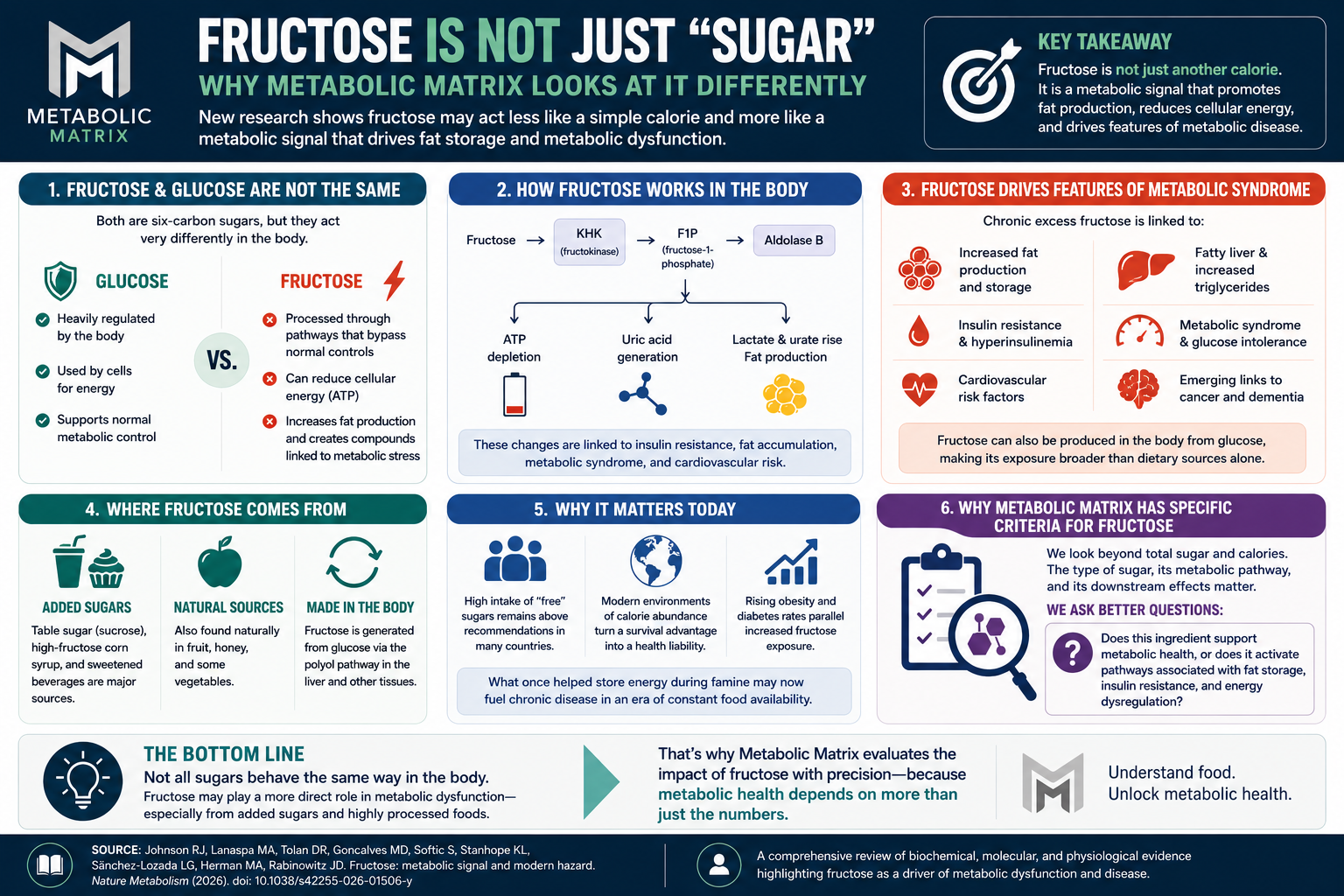
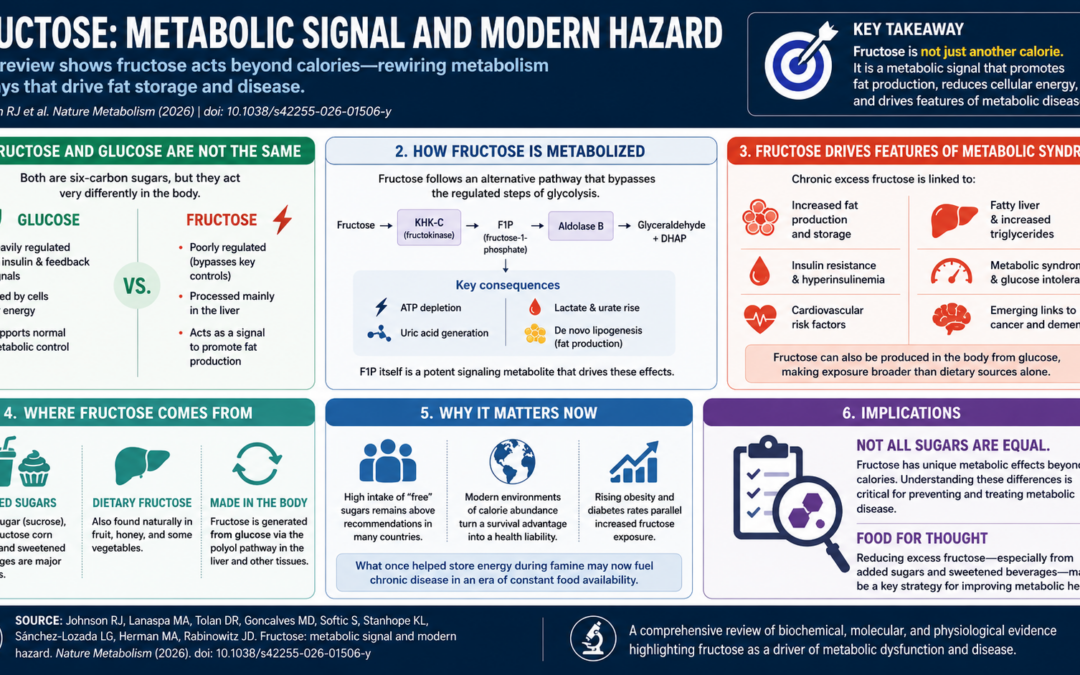
Glucose is widely used by cells for energy and is subject to several layers of metabolic regulation. Fructose, by contrast, is processed through pathways that can bypass some of the body’s normal control systems. This may increase fat production, reduce cellular energy availability, and generate compounds associated with metabolic stress.
As study lead author Dr. Richard Johnson put it, “Fructose is not just another calorie.” The review describes fructose as a metabolic signal that can promote fat production and storage in ways that differ from glucose.
Why This Matters for Obesity and Metabolic Disease
The review connects fructose metabolism to several processes involved in metabolic disease, including:
- Increased fat production
- Reduced cellular ATP, the body’s core energy currency
- Insulin resistance
- Metabolic syndrome
- Cardiovascular risk factors
- Obesity-related dysfunction
This does not mean fructose is the only driver of metabolic disease. But it does suggest that fructose may be more biologically active than the “empty calorie” label implies.
That is exactly why Metabolic Matrix does not evaluate foods and ingredients by sugar content alone. The type of sugar matters. The metabolic pathway matters. The downstream effect matters.
Fructose Is Especially Relevant in Modern Food Environments
The researchers also point out that fructose exposure is not limited to obvious sources like soda, candy, or sweetened desserts. Fructose is found in many widely used sweeteners, including sucrose and high-fructose corn syrup, and the body can also produce fructose internally from glucose under certain conditions.
From an evolutionary perspective, fructose-driven fat storage may once have been useful. In a world of seasonal food scarcity, a biological system that helped the body store energy efficiently could support survival.
But in today’s environment, where highly processed, calorie-dense foods are available constantly, that same mechanism may contribute to chronic metabolic stress.
In other words, fructose may have been useful in famine biology, but problematic in modern abundance.
This Is Why Metabolic Matrix Has Specific Criteria for Fructose
At Metabolic Matrix, we are focused on how foods interact with human metabolism, not just how they look on a nutrition label.
A product may appear acceptable based on calories, total carbohydrates, or even total sugar. But if it contains a high fructose load, especially from added or refined sweeteners, it may have a very different metabolic impact than those numbers suggest.
That is why fructose requires specific attention.
Metabolic Matrix criteria are designed to look beyond surface-level nutrition claims and ask better questions:
Does this ingredient support metabolic health, or does it activate pathways associated with fat storage, insulin resistance, and energy dysregulation?
The new review reinforces the importance of that approach. Fructose is not simply another sweetener to count. It is a biologically distinct compound with unique metabolic effects.
The Bottom Line
The ScienceDaily report and Nature Metabolism review highlight a crucial point: not all sugars behave the same way in the body.
Fructose may play a more direct role in metabolic dysfunction than previously appreciated, particularly when consumed as part of added sugars and highly processed foods. For Metabolic Matrix, this supports the need for a dedicated fructose criterion when evaluating foods, sweeteners, and metabolic risk.
Because when it comes to metabolic health, the question is not just “How much sugar?”
It is also: What kind of sugar, in what form, and what does it do inside the body?
Source: ScienceDaily report on University of Colorado Anschutz materials, May 11, 2026. Journal reference: Johnson RJ, Lanaspa MA, Tolan DR, et al. “Fructose: metabolic signal and modern hazard.” Nature Metabolism, 2026. DOI: 10.1038/s42255-026-01506-y.