The Big Shift: Health Is Moving From Preference to Purchasing Behavior
Health-conscious eating is no longer a niche consumer preference. It is becoming a material force in the food and beverage market.
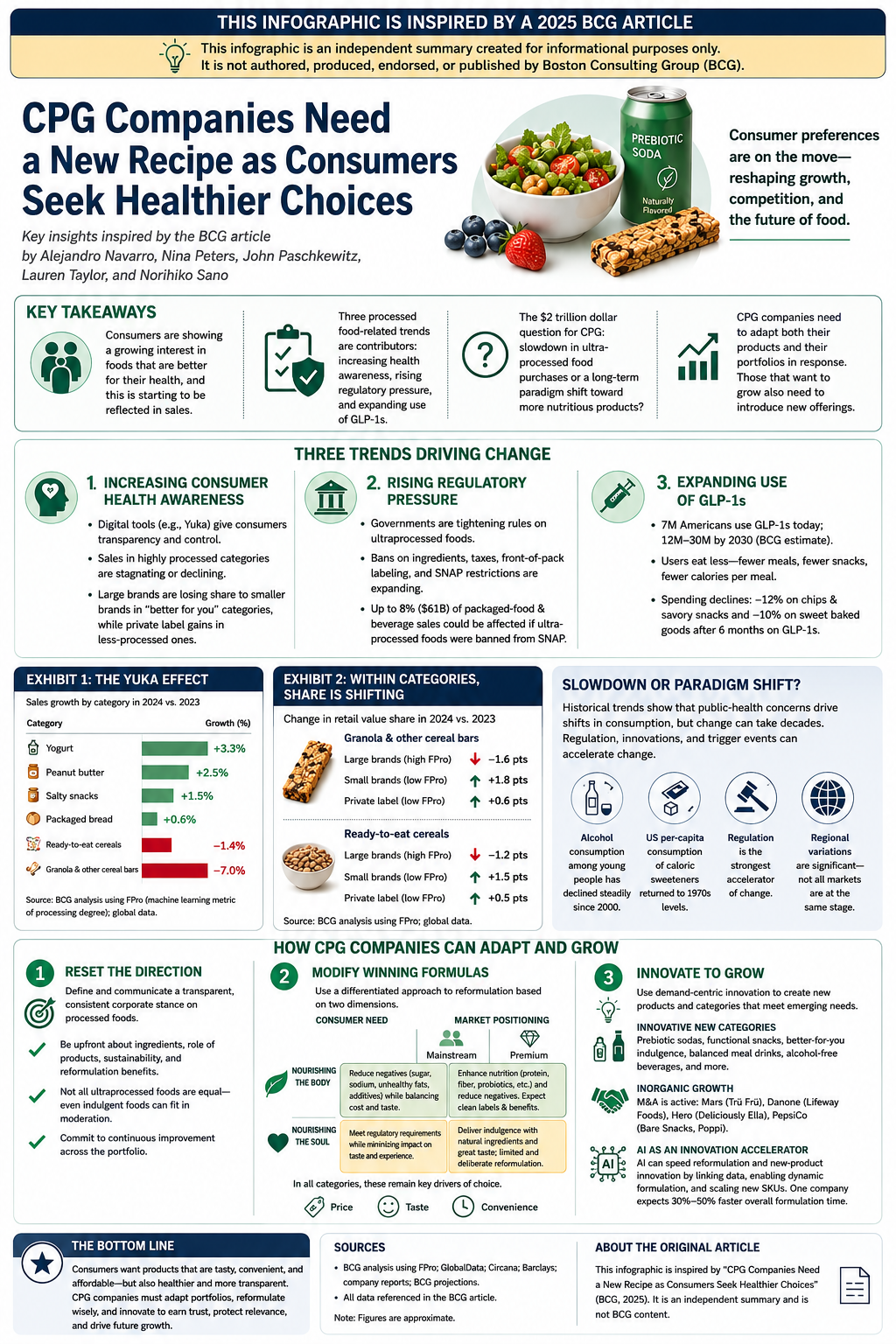
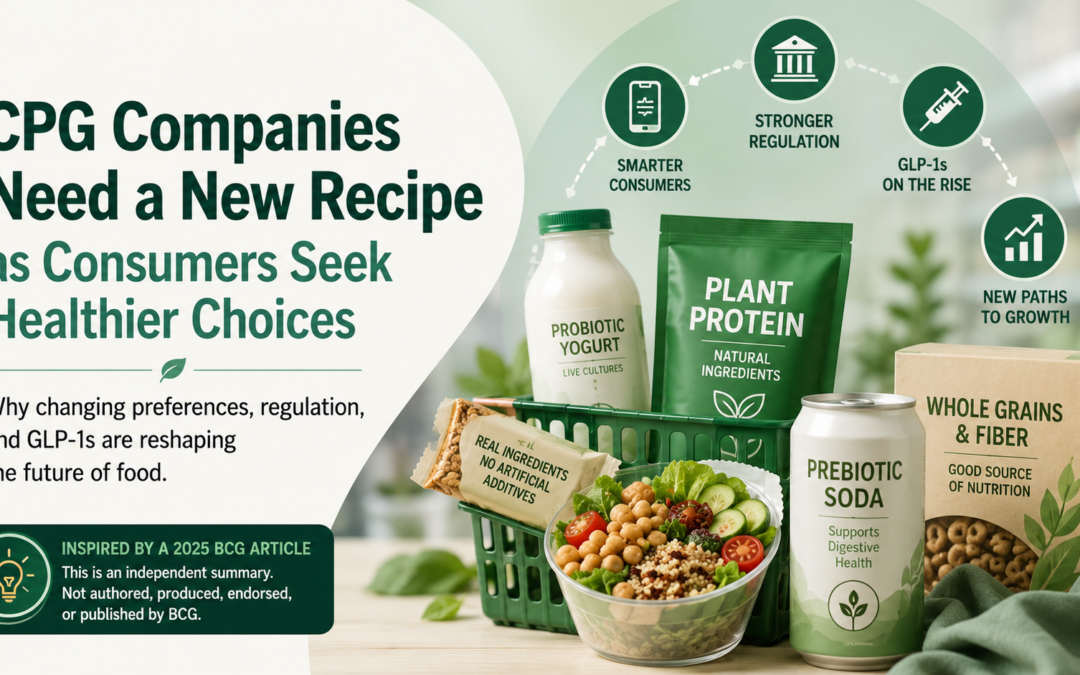
A BCG article points to a slowdown in overall food and beverage market growth, with large CPG players under particular pressure. While inflation, private label growth, consumer confidence, and innovation gaps all play a role, the article highlights three especially important forces reshaping demand:
First, consumers are more informed.
Digital tools, ingredient scanners, health apps, and public conversations about ultraprocessed foods are giving shoppers more transparency than ever before. Consumers can now evaluate nutrition, additives, processing levels, and ingredient quality directly at the shelf.
Second, regulators are becoming more active.
Governments are increasingly scrutinizing ingredients, labeling, advertising, and eligibility for public food programs. This is especially relevant for products associated with high levels of sugar, sodium, artificial additives, and ultraprocessing.
Third, GLP-1 medications are changing appetite.
The growing use of GLP-1 drugs for obesity and diabetes is reducing overall consumption for many users and shifting food preferences away from some highly processed categories. This could have a significant long-term impact on snacks, sweets, baked goods, and other indulgent packaged foods.
Slowdown or Structural Change?
The central question is whether this is a temporary slowdown in ultraprocessed food consumption—or a deeper, long-term paradigm shift.
BCG’s article suggests that CPG companies should prepare for the latter.
That does not mean processed foods will disappear. Many processed products deliver real benefits: affordability, convenience, food safety, shelf life, fortification, and accessibility. Consumers still value taste, price, and ease. But the role of highly processed products in the portfolio is likely to change.
The future will not simply be “processed versus unprocessed.” It will be more nuanced. Companies will need to understand where processing adds value, where it creates risk, and where consumers expect cleaner, more functional, or more natural alternatives.
What CPG Companies Need to Do
The article outlines a clear strategic challenge: companies cannot simply defend the old model. They need to adapt products, rethink portfolios, and invest in new growth platforms.
A strong response has three parts.
1. Reset the Direction
CPG companies need a clearer corporate stance on nutrition and processing.
This means being transparent about ingredients, product roles, sustainability, and reformulation choices. It also means acknowledging that not all ultraprocessed foods are the same. Some products are occasional indulgences. Others may be everyday staples. Still others may have an opportunity to become more nutritious, functional, or minimally processed.
A credible strategy requires consistency. Consumers, employees, retailers, investors, and regulators all need to understand where a company stands and how it intends to improve.
2. Modify Winning Formulas
Reformulation is essential, but it cannot be one-size-fits-all.
Some products should be reformulated boldly, especially premium products positioned around health, nutrition, and functional benefits. These products can often support cleaner labels, added protein, fiber, probiotics, vitamins, or reduced sugar.
Other products require a more careful approach. Mainstream products must balance health improvements with affordability and taste. Indulgent products may not need to become “healthy,” but they may still benefit from removing controversial additives, improving ingredient quality, or making selective changes that preserve the consumer experience.
The key is to reformulate based on the product’s role: Is it nourishing the body, nourishing the soul, mainstream, or premium?
3. Innovate to Grow
The biggest opportunities may come not from tweaking existing products, but from creating new categories.
Prebiotic sodas, functional snacks, nutritionally balanced ready-to-drink meals, alcohol-free social beverages, and naturally indulgent snacks all point toward a new innovation frontier. Consumers are looking for products that resolve old tradeoffs: tasty but healthier, convenient but nutritious, fun but functional.
The article also emphasizes the role of AI in accelerating innovation. AI can help companies analyze consumer feedback, sensory data, ingredient interactions, and formulation options more quickly. Used well, it can shorten product development cycles and expand the number of viable formulas.
The Bottom Line
The food and beverage industry is entering a new phase. Consumers are not abandoning convenience, taste, or affordability—but they are increasingly demanding products that align with health, transparency, and better nutrition.
For CPG companies, the message is clear: standing still is risky.
The winners will be companies that can protect what consumers already love while reformulating intelligently, communicating transparently, and innovating into new spaces of demand.
The next era of packaged food will not belong simply to the biggest brands. It will belong to the brands that can earn trust, adapt quickly, and create products that meet consumers where they are going—not just where they have been.
READ THE BCG ARTICLE HERE: https://www.bcg.com/publications/2025/cpg-companies-need-new-recipe-consumers-seek-healthier-choices