
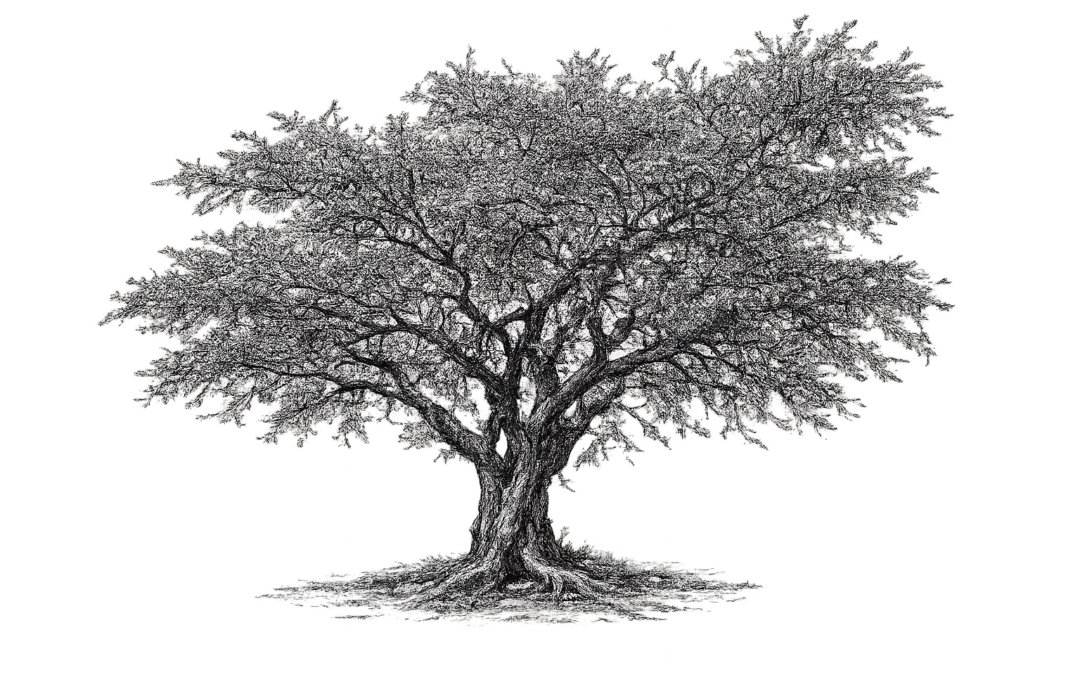
The Sidr Tree (Ziziphus spina-christi) is more than a botanical presence—it is a living system of resilience, nourishment, and continuity. In arid and semi-arid landscapes where fragility is the norm, the Sidr does not merely survive; it stabilizes ecosystems, supports communities, and anchors food systems across generations.
Like the Sidr Tree itself, the science of metabolism is rooted in a long and enduring tradition. The central role of metabolism in human health is not a recent conceptual development, but the continuation of a scientific lineage spanning more than two centuries. In the late 18th century, Antoine Lavoisier established the foundations of metabolic science by demonstrating that respiration is a form of biological combustion, linking oxygen consumption to energy metabolism. In the 19th century, Justus von Liebig advanced the chemical basis of nutrition, while Claude Bernard introduced the concept of the milieu intérieur and revealed the dynamic regulation of glycogen metabolism—shifting understanding from food as simple fuel to physiology as an integrated system. Throughout the 20th century, advances in biochemistry—from the discovery of insulin to the mapping of metabolic pathways and hormonal regulation—further established metabolism as the organizing framework of nutrition and chronic disease. Today, this perspective is re-emerging with urgency, as global institutions increasingly recognize metabolic health as the “North Star” for designing future food systems.
At its core, the Sidr Tree is a symbol of food security. Its fruit is nutrient-dense—rich in vitamins, minerals, and bioactive compounds—providing reliable sustenance in environments where agricultural diversity is often limited. Its leaves, honey (derived from Sidr blossoms), and medicinal properties extend its value beyond calories into the realm of functional nutrition. In this sense, the tree operates as a decentralized, regenerative food source—aligned with the principles of metabolic health rather than just caloric intake.
From a metabolic perspective, the Sidr embodies balance. Its nutritional profile supports glycemic stability, gut health, and immune function—key pillars in addressing modern metabolic disorders. It represents a shift from extractive, high-yield monocultures toward systems that nourish both human physiology and ecological integrity.
Culturally, the Sidr Tree carries deep significance across the Middle East, North Africa, and parts of Asia. It appears in traditional medicine, spiritual narratives, and local economies. This cultural embeddedness is critical: food security is not only about availability, but also acceptance, trust, and continuity of knowledge. The Sidr is already integrated into lived systems—it does not need to be introduced, only supported and scaled.
In Kuwait, the Sidr Tree holds a particularly intimate cultural role. It is widely recalled that most family homes once cultivated a Sidr tree in their courtyard, making it both a domestic and communal symbol of sustenance and shade. Today, this legacy is being actively preserved—most notably through the Kuwait Institute for Scientific Research (KISR), which maintains botanical conservation sites with multiple Sidr species. These efforts reflect a national recognition that the Sidr is not just a plant, but a living cultural artifact, deeply tied to identity, heritage, and continuity in a rapidly modernizing landscape.
As a symbol for the Metabolic Matrix Technology Transfer, the Sidr Tree is remarkably precise. Its deep root system reflects foundational infrastructure—absorbing, stabilizing, and redistributing resources across a network—much like the foundational principles of metabolic science that underpin modern nutrition. Its branching architecture mirrors modular, adaptive systems that can expand without losing coherence, analogous to the interconnected pathways of human metabolism. It thrives under constraint, demonstrating that robustness emerges not from abundance, but from intelligent regulation within limits.
Most importantly, the Sidr Tree is an organism that stands the test of time. It does not optimize for short-term yield, but for long-term viability. This is the same paradigm shift the Metabolic Matrix represents: building on centuries of metabolic science to move from fragmented, reactive interventions toward integrated, systemic resilience in food and health systems.
In this way, the Sidr Tree becomes more than a metaphor—it is a model. A blueprint for how nutrition, culture, ecology, and science can converge into a unified system that sustains life under pressure, adapts to change, and continues to give.